

















AI7 min read
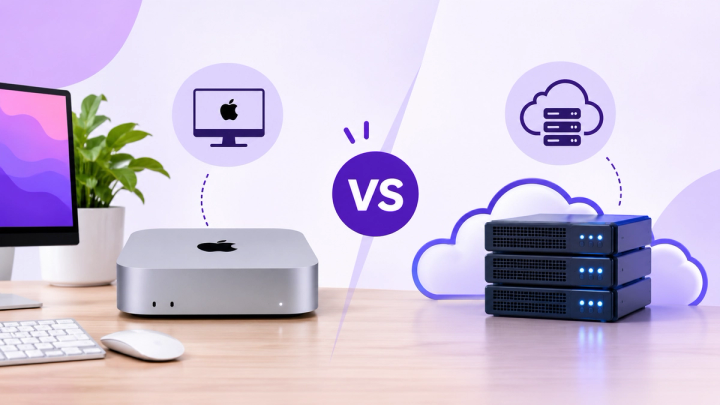
Mac Mini vs Virtual Machine for AI Agents: Best Way to Run Your AI Agent in 2026
 3 Nov 2026 · Ishani Dhar Chowdury

Work management
CRM & customer
AI platforms
Automation
Ready to scale your workflows?
What are the popular AI Use Cases in Australian Public Sector? This blog post covers everything from citizen request tracking to budget forecasting, and more.
 Josh Jebathilak
The Australian public sector is slowly using AI. Can it truly shorten permit queues or catch budget blowouts?
Many agency leaders have asked this question. Research shows that AI usage among Australian public sector workers has risen from 58% to 70%.
Agencies are changing how they function. Yet pressures sit behind AI rollouts. The Australian public sector faces tight budgets along with thin staffing and rising service expectations.
They are simply running the experiment at scale. But with more scrutiny attached. In this blog post, we'll discuss AI use cases for the public sector in Australia.
Policy, not hype, is doing most of the pushing. Two federal plans landed within three weeks of each other in late 2025.
The appetite at the top is clear too. IBM's research found that 69% of government executives believe the productivity gains from AI are big enough that they must accept significant risk to keep pace.
Australia's public sector sits close behind large private enterprises.
That's because agencies are finally tackling the process problems AI is good at solving. That would be too many handoffs, manual data entry, and little visibility across departments.
So where is that effort going? Here are the five AI use cases for the public sector in Australia where agencies are seeing the clearest return.
This is where AI is easiest to see and measure. Permit applications, service requests and case files are repetitive by nature, making them good candidates for automation.
In practice:
It also lines up with what agencies say they want. In a Gartner survey of 138 government organisations, 50% ranked improved citizen experience among their top three priorities.
Does your service desk still run on tickets and spreadsheets? See how monday.com handles helpdesk and service request workflows before you build another manual process.
A large share of public service time goes on writing. That would be briefs, minutes, correspondence, and summaries of long reports.
Generative AI handles the first draft so staff can spend their time checking and refining it. Australia already has hard numbers on this.
The DTA ran a six-month trial of Microsoft 365 Copilot in 2024. They gave access to more than 7,600 staff across 60+ agencies. Participants saved an average of an hour a day on note-taking and admin work.
The same evaluation flagged a catch. Some of that saved time went into reviewing AI output for errors. The lesson is to treat AI drafts as a starting point, with a person signing off on anything that leaves the agency.
This is one of the most important AI use cases for the public sector. Budget overruns are a recurring theme in public sector reporting.
Too often, finance teams find a shortfall at quarter-end, when the options to fix it have narrowed.
Finance teams in general have moved quickly here. Gartner's 2025 AI in Finance Survey found 59% of finance leaders now use AI in their finance function, up from 37% in 2023.
None of this replaces a finance director's judgement. It just gives them better information, sooner.
Book a complimentary 30-minute audit with a Fruition consultant. We will map your workflows, spot the automation wins and show you what the build looks like.
Missed audits and weak controls are well documented in the Australian government. IT is the biggest gap.
The Australian National Audit Office found that 45% of all audit findings related to the IT control environment, particularly IT security. Surely a lot of risk is sitting in systems nobody watches closely enough.
Automated checkpoints help by flagging these before an audit deadline arrives:
Pre-built approval workflows add another layer. When every sign-off has a set path and a timestamp, a form is far less likely to get lost in the handoff between teams, and the audit trail builds itself as the work happens.
Every sector is short on people who can build and run AI-supported workflows. The Australian public sector is further behind than most. Indeed's Hiring Lab found that in February 2026, 2.7% of government job postings mentioned AI, compared with 6.2% across Australia overall.
Government has a second problem. When long-serving staff retire, years of know-how about how things actually get done leaves with them.
AI can help on both fronts.
No-code and low-code tools matter here as well. They let non-technical teams build and adjust their own workflows without waiting in an IT queue. For a sense of what is possible, review monday.com's AI use cases for work management, many of which suit resource-constrained teams.
We've covered the important AI use cases for the public sector in Australia. AI is good at spotting patterns people miss in large volumes of transactions.
This use case needs the strongest guardrails. Any system that could affect a person's payments or entitlements must have human review, clear explanations and a way to appeal.
Trust is the one thing agencies cannot automate around, and the public is wary. According to Pew Research Centre's 25-country study, roughly half of Australian adults are more concerned than excited about the growing use of AI in daily life.
That is why the rules for government are stricter than most industries will ever see.
The first Policy for the responsible use of AI in government took effect on 1 September 2024. It required agencies to name AI Accountable Officials and publish AI Transparency Statements.
The DTA overhauled that policy on 2 December 2025, alongside a new AI impact assessment tool and guidance on AI procurement. Version 2.0 took effect on 15 December 2025.
Agencies must complete an impact assessment for in-scope AI use cases by 15 December 2026, and all staff must complete responsible AI training.
For any team weighing up AI tools, government or not, the lesson is the same.
How can Fruition help? Our team works with Australian public-sector and public-sector-adjacent organisations.
We've helped agencies and large teams adopt AI with the right guardrails on data security, ethics and workforce upskilling, rather than bolting on another standalone chatbot. Fruition's consultants understand compliance-heavy environments, approval chains, and multi-stakeholder reporting.
The top AI use cases for the public sector in Australia aren't exotic. Each of the points shared comes with real governance behind it.
What separates the agencies getting results from the ones stuck in pilot? Implementation discipline, not the AI model they picked. The platform matters less than the process behind it.
If your team is weighing up where to start, or you already use monday.com and want to add AI without creating new risk, talk to us. Contact Fruition for a free quote, and we will help you map the use cases that fit your workflow.
The five AI use cases for the public sector in Australia covered here are citizen request tracking and case management. They also include document drafting and summaries, budget forecasting, compliance monitoring, and knowledge capture. Most agencies combine several rather than running one in isolation.
It's growing. Survey data shows daily AI use among public sector workers rising year on year. Also, the federal government released two AI plans and an updated AI policy in late 2025.
Agencies follow the DTA's Policy for the responsible use of AI in government (version 2.0, effective 15 December 2025). It requires named AI Accountable Officials, published AI Transparency Statements, staff training and an impact assessment for in-scope AI use cases by 15 December 2026.
3 Nov 2026 · Ishani Dhar Chowdury 30 Oct 2026 · Josh Jebathilak30 Oct 2026 · Ishani Dhar Chowdury
Book a 30-minute call. A consultant will walk through how these ideas fit your workflows.