


























AI9 min read
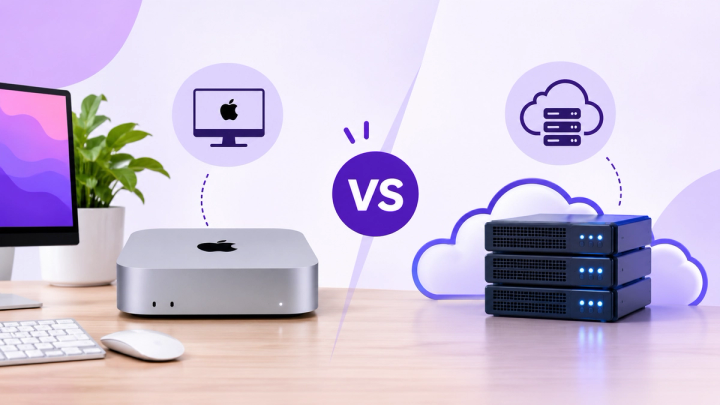
Cloud Infrastructure vs Workflow Automation: How to Pick the Right AI Consultant for 2027?
 17 Nov 2026 · Josh Jebathilak

Work management
CRM & customer
AI platforms
Automation
Ready to scale your workflows?
AI harness will make your agent model reliable. In this blog, learn about AI harness production use cases.
 Ishani Dhar Chowdury
Why do you think AI agents fail? It's not because the model is weak. Ideally, you didn't install a supervision layer to keep them on track.
Imagine this: You've built an agent that worked perfectly in the demo setup. Your team just made it live. Now it's referring to unused tools. The agent is also running loops on failed steps.
According to Gartner, 40% of AI agent projects might be cancelled. Why? You can blame cost escalations, unclear enterprise value, and inadequate risk controls.
How do you fix that? Enter AI harness.
It's a software layer that supervises the model. For example, it will turn reasoning into reliable work. Most AI harness production use cases have become essential.
In this blog post, we'll discuss AI harness and some use cases.
You can refer to AI harness as agentic or agent harness. This is the literal software environment around all your AI models.
It gives agents:
With these, they can complete work without errors and human supervision. In simple terms, Agent = Model + Harness.
How did harness engineering come to be? It's prompt and context engineering merged into one.
An AI harness combines and merges workflows. The components include:
In short, an AI harness for production use cases handles system instructions, memory, feedback, planning, execution, context, and more.
Some agents might fail once they move from answering to acting across systems. That's where you need AI harness production use cases.
Did you know LangChain went from Top 30 to Top 5 in Terminal Bench 2.0? They changed the coding agent's harness without editing the model.
Your AI agent will need a harness because:
Your AI agent's model might have performed as expected. So, what's missing? That could be the infrastructure.
Statista reported that the AI agent market will reach USD 1.46 trillion by 2030. Agentic architectures need the best supervision to stay relevant.
Let's look at ways an AI harness makes agent decisions safe to run in production.
They'll do the following for your team:
The AI harness layer will limit agents to approved actions on customer records. It also keeps the entire ticket history in context. By 2029, agentic AI will automatically resolve about 80% of common customer service issues.
What happens when the issue is sensitive? It will escalate to a human, with every action logged for audit.
Book a complimentary 30-minute audit with a Fruition consultant. We will map your workflows, spot the automation wins and show you what the build looks like.
Only 24% of project management companies have successfully adopted AI for portfolio, project, and program management. Even then, AI agents can help:
This AI harness production use case gives AI read access across project boards. It also gives write access to reporting boards.
The model can check patterns against source data before publishing. You'll get a record of which items it flagged and why.
Did you know 94% of sales leaders agreed that agents are critical to meet business demands? A CRM AI agent will:
They do this over a campaign that runs for weeks. How does an AI harness help with this? It'll store campaign progress for the agent to pick up where it left off daily.
It also sets a limit for the emails sent. The model can seek human approval before impacting high-value accounts.
An AI agent in development can:
Most developers only trust AI output when they can easily verify it. That's exactly what AI harness builds in. Trust still depends on human checks.
AI harness provides File and Git access in isolated sandboxes. It also makes agents run tests before a task is done.
The harness keeps a feature list and progress notes for work to continue across sessions. Some examples of harness engineering include Claude Code and Codex.
An AI agent in this sector can:
Deloitte reports that unplanned downtime can cost industrial manufacturers USD 50 billion every year. Predictive maintenance can solve that.
AI harness connects the agent to the right data sources. Moreover, it defines thresholds and safety rules. With this, you can create work orders for supervisors, record recommendations, and monitor accountability.
AI agents will augment about 50% of all business decisions by 2027. The catch? Data quality.
The AI agents for data and analytics can perform these outputs:
That's why the next AI harness production use case gives schema and validates SQL. It also enforces who sees which data for better checks.
Only 22% of enterprises have moved past pilots to organisation-wide agentic AI for marketing content. These AI agents can:
How does an AI harness help here? It can coordinate specialist agents to pass the context as needed. For example, a researcher can work with a writer and a compliance reviewer.
You don't have to worry about accessing powerful agents. But do worry about the context, tools, feedback loops, and guardrails.
An AI harness lets your agent finish what it started without errors. Get this right and even mid-tier models can deliver dependable results.
Select a use case for your business. Build the harness around it. Measure the workflows. Then expand.
How can Fruition help? We'll assist you in choosing the best agent use case with clear ROI. Our team will also build your tech stack with APIs, MCPs, and integrations.
Are you ready to get your team trained alongside agents? Book a free consultation to map your first AI harness production use case.
It's the AI model layer that lets you do real work. That includes the tools AI agents use, the memory they keep, the rules they follow, and the checks on their output. Most agents fail due to lost context, no saved state or verification, and unchecked tool calls.
It all boils down to how a harness handles tool calls. A well-built one will intercept the agent's request to use the tool. Then, checks agent permissions to take action. Once done, the AI harness runs the action, cleans the result, and returns it to the model for next steps.
Your harness is ready when it enforces strict permissions. It should also have hard limits on spend and runtime. There should be human sign-off for risky actions. It must survive crashes, log traceable decisions, verify its own work, and pass multi-run evaluations.
17 Nov 2026 · Josh Jebathilak16 Nov 2026 · Josh Jebathilak 3 Nov 2026 · Ishani Dhar Chowdury
Book a 30-minute call. A consultant will walk through how these ideas fit your workflows.